

About
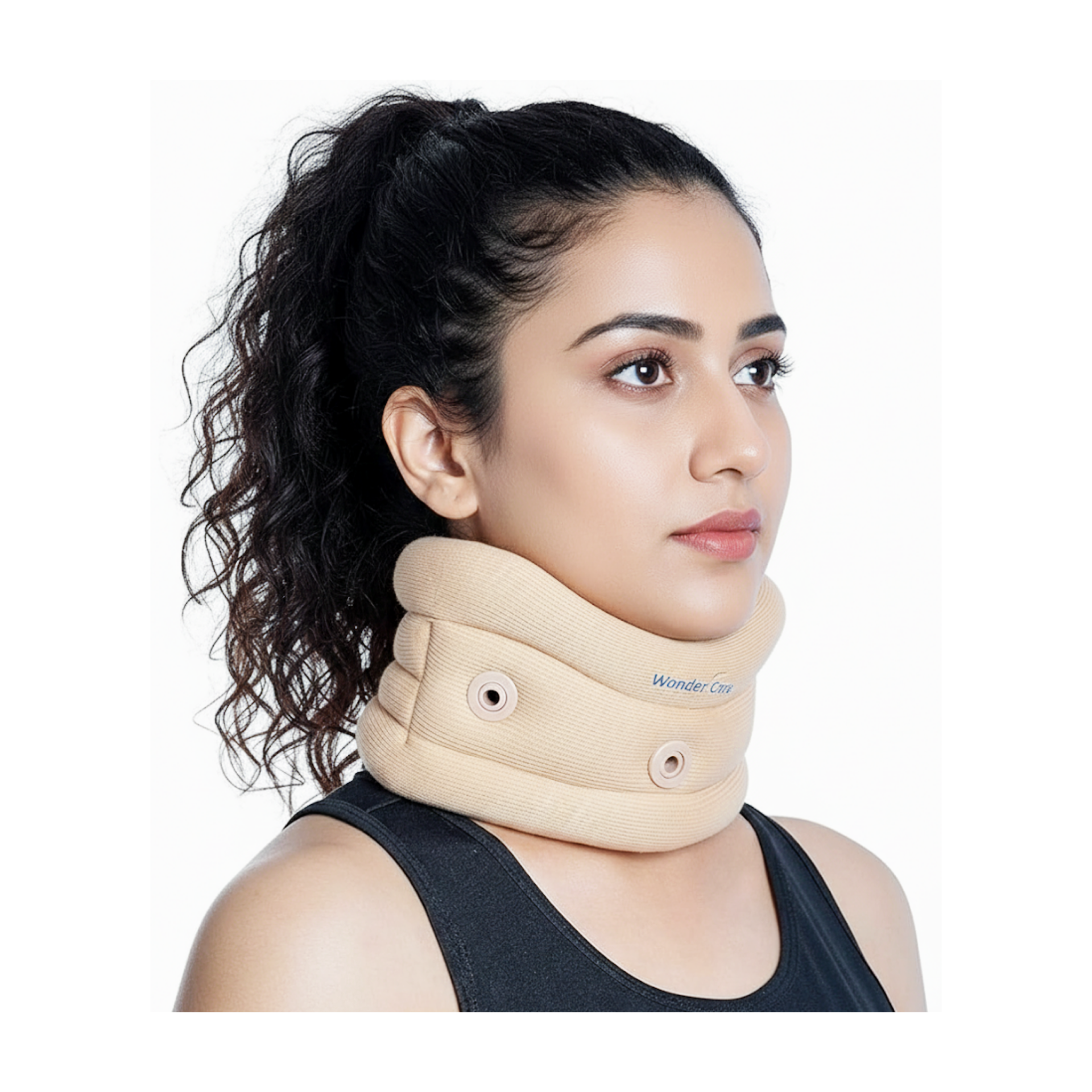
A cervical collar is a common medical device designed to provide support and restrict the movement of the cervical spine, often used for short-term management of neck pain or minor injuries. It typically consists of a soft foam or semi-rigid material that wraps around the neck, offering gentle compression and limiting flexion, extension, and rotation. The primary aim is to reduce muscle spasms, alleviate pain, and prevent further strain on the neck structures, allowing for a period of rest and healing. While less restrictive than a full cervical orthosis, it still plays a crucial role in initial injury management and comfort, aiding in the recovery process.
Uses
- Acute neck pain and muscle strain
- Whiplash injuries
- Cervical spondylosis exacerbations
- Post-operative support for minor procedures
Directions For Use
Position the collar around the neck with the chin resting comfortably in the designated area. Secure the fasteners at the back, ensuring a snug but not overly tight fit.
Benefits
- Provides gentle support to the neck
- Helps alleviate acute neck pain
- Limits uncomfortable neck movements
- Promotes muscle relaxation and healing
- Offers comfort during recovery
- Easy to apply and adjust
Side Effects
- Skin irritation or chafing
- Increased neck stiffness
- Discomfort from prolonged wear
- Difficulty with hygiene
- Muscle weakness with extended use
- Feeling of restriction or claustrophobia
- Minor pressure points
- Sweating under the collar
- Difficulty swallowing or speaking
- Headaches from improper fit
- Reduced range of motion
- Psychological dependency
Safety Measures
- Alcohol - Alcohol consumption can impair judgment, potentially leading to improper use or removal of the cervical collar, which could compromise neck stability and hinder recovery.
- Pregnancy - A cervical collar is generally safe during pregnancy. Ensure the fit remains comfortable as body shape changes. Consult a healthcare provider for personalized advice.
- Breastfeeding - Use of a cervical collar is safe during breastfeeding as it is a mechanical device and does not involve systemic absorption of substances.
- Liver - A cervical collar is an external mechanical device and has no direct impact on liver function. No specific precautions are needed for patients with liver conditions.
- Kidney - Use of a cervical collar does not affect kidney function. Patients with kidney conditions can safely use this device without specific concerns related to their renal health.
- Lung - While generally safe, an overly tight cervical collar, especially a rigid one, could potentially restrict breathing in individuals with severe respiratory compromise. Ensure a comfortable fit that does not impede respiration.
Disclaimer
MedEHub is committed to delivering reliable, expert-reviewd information to help consumers make informed health decisions. However, the content provided on this website is for informational purposes only and is not intended to replace professional medical advice, diagnosis or treatment.
Always consult your doctor for any medical concerns, and discuss your questions about health conditions or medications with a qualified healthcare professional. Do not ignore or delay seeking professional medical advice based on information found on Med E Hub.
Our goal is to complement, not replace, the essential doctor-patient relationship.
| Shipping Cost |
|
| Shop Location | Assam, India |











No comments found for this product. Be the first to comment!