

About
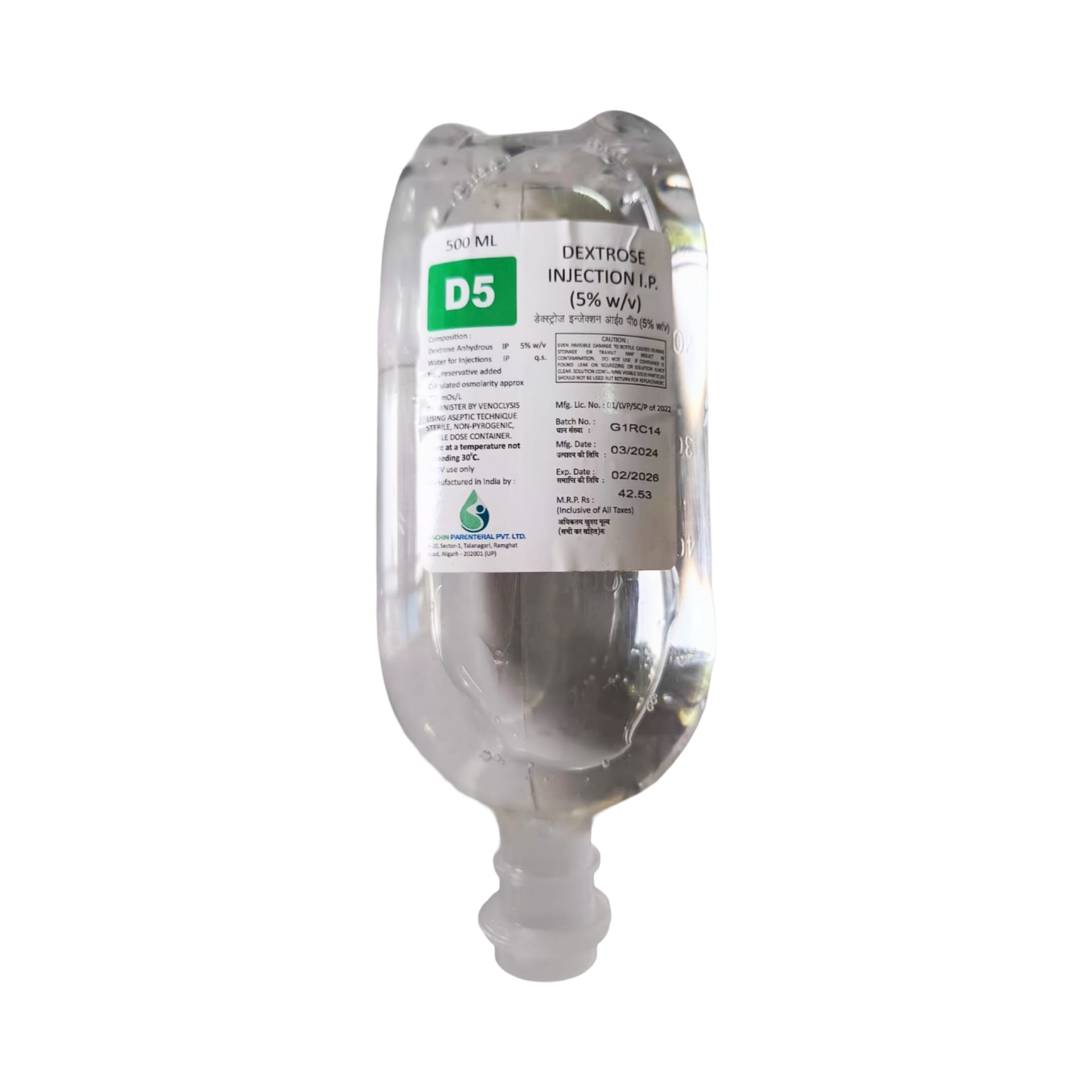
Dextrose 5% in water (D5W) is an intravenous solution containing 5 grams of dextrose (glucose) per 100 mL, making it an isotonic solution initially, but physiologically hypotonic as glucose is metabolized. It provides a source of calories and free water, which helps in maintaining fluid balance and preventing dehydration. This solution is primarily used to replenish fluid losses, provide minimal caloric support, and serve as a vehicle for the administration of compatible medications. It is crucial in situations requiring hydration without significant electrolyte replacement or when a patient's glucose levels need to be maintained, supporting various metabolic functions.
Uses
- Fluid replacement and hydration.
- Source of calories for energy.
- Treatment of hypoglycemia.
- Vehicle for intravenous medication administration.
Directions For Use
Administer intravenously as directed by a healthcare professional. Dosage and rate of infusion depend on the patient's age, weight, clinical condition, and concomitant therapy.
Benefits
- Provides essential hydration.
- Supplies readily available energy.
- Helps prevent ketosis.
- Can dilute other medications for IV delivery.
- Supports metabolic processes.
- Maintains electrolyte balance when used appropriately.
Side Effects
- Hyperglycemia (high blood sugar).
- Fluid overload/edema.
- Electrolyte imbalances (e.g., hyponatremia).
- Local pain or irritation at injection site.
- Phlebitis or thrombophlebitis.
- Fever.
- Infection at the injection site.
- Glycosuria (glucose in urine).
- Hypokalemia (low potassium) if not monitored.
- Rebound hypoglycemia if infusion stopped abruptly.
- Allergic reactions (rare).
- Cardiac overload in susceptible patients.
Safety Measures
- Alcohol - No direct interaction with alcohol, but alcohol consumption should be discussed with a doctor, especially if underlying conditions requiring dextrose are present.
- Pregnancy - Generally considered safe for use during pregnancy when clinically indicated, but fluid and glucose levels should be closely monitored.
- Breastfeeding - Generally considered safe for use during breastfeeding. No known adverse effects on the infant are expected.
- Liver - Use with caution in patients with severe liver impairment, as glucose metabolism may be altered, requiring careful monitoring of blood glucose.
- Kidney - Use with caution in patients with severe kidney impairment due to the risk of fluid overload and electrolyte imbalances; close monitoring is essential.
- Lung - Use with caution in patients with severe lung conditions (e.g., pulmonary edema) due to the risk of fluid overload exacerbating respiratory distress.
Disclaimer
MedEHub is committed to delivering reliable, expert-reviewd information to help consumers make informed health decisions. However, the content provided on this website is for informational purposes only and is not intended to replace professional medical advice, diagnosis or treatment.
Always consult your doctor for any medical concerns, and discuss your questions about health conditions or medications with a qualified healthcare professional. Do not ignore or delay seeking professional medical advice based on information found on Med E Hub.
Our goal is to complement, not replace, the essential doctor-patient relationship.
| Shipping Cost |
|
| Shop Location | Assam, India |














No comments found for this product. Be the first to comment!