

About
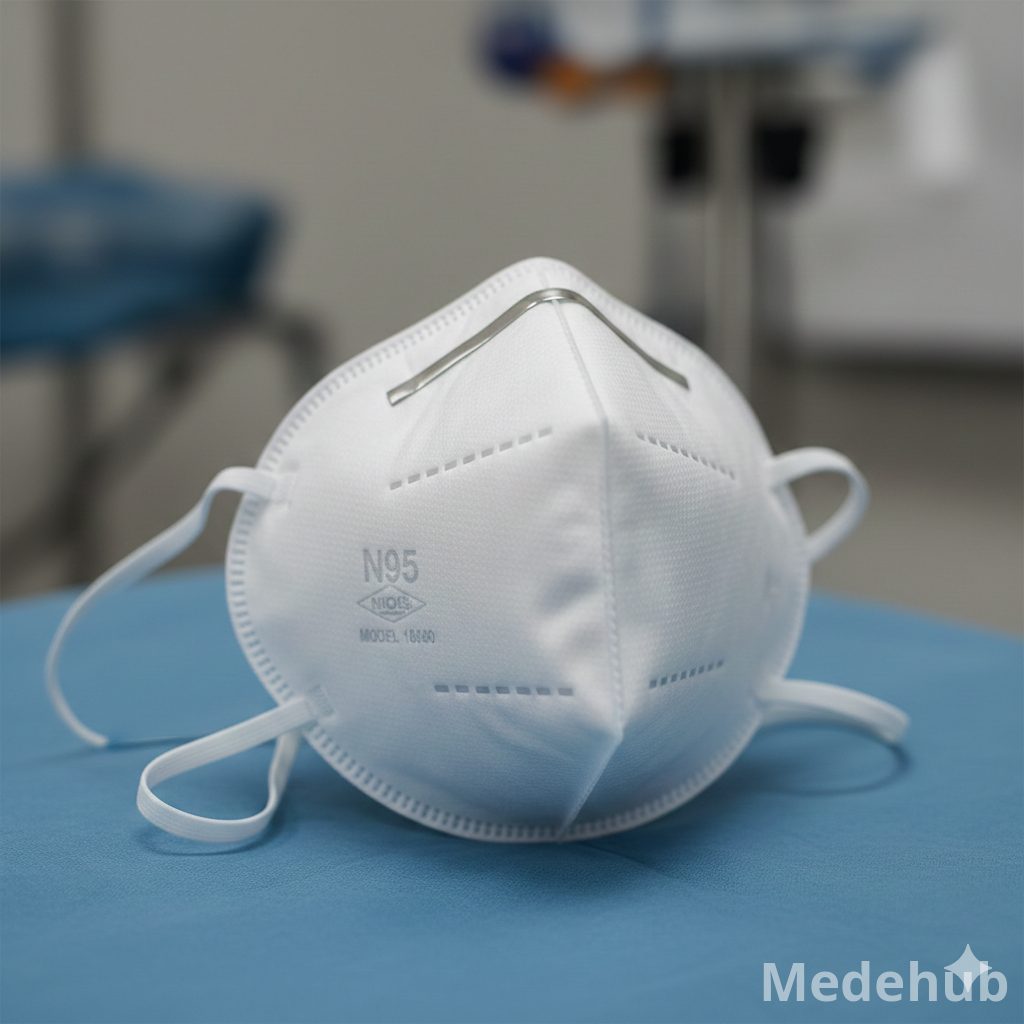
An N95 mask is a type of personal protective equipment (PPE) designed to achieve a very close facial fit and very efficient filtration of airborne particles. The "N95" designation means that when subjected to careful testing, the respirator blocks at least 95 percent of very small (0.3 micron) test particles. Unlike surgical masks, N95 respirators are designed to reduce the wearer's exposure to airborne particles, including small particle aerosols and large droplets. They are critical in healthcare settings to protect against respiratory pathogens and in industrial environments to guard against dust, fumes, and mists, providing a higher level of respiratory protection than standard face masks.
Uses
- Protection against airborne particulate matter
- Healthcare settings for infection control
- Industrial environments with dust/fumes
- Reducing exposure to allergens and pollutants
Directions For Use
Place the mask over your nose and mouth, securing the straps behind your head. Perform a seal check to ensure a tight fit.
Benefits
- High filtration efficiency (95% of 0.3 micron particles)
- Provides superior respiratory protection
- Reduces exposure to airborne pathogens
- Offers protection against dust and allergens
- Close facial fit minimizes leakage
- Essential for frontline healthcare workers
Side Effects
- Discomfort or pressure on the face
- Difficulty breathing or shortness of breath
- Skin irritation, redness, or acne
- Headaches due to tightness
- Fogging of eyeglasses
- Heat buildup and sweating
- Communication difficulties
- Fatigue with prolonged use
- Allergic reaction to mask material
- Impaired peripheral vision
- Psychological distress or claustrophobia
- Reduced oxygen saturation (rare, with proper fit)
Safety Measures
- Alcohol - Do not clean N95 masks with alcohol; it can degrade the filtration material.
- Pregnancy - Pregnant individuals should consult a healthcare provider regarding prolonged N95 use, especially if experiencing respiratory discomfort.
- Breastfeeding - Generally safe for breastfeeding mothers, but ensure comfort and adequate breathing.
- Liver - No direct interaction; however, individuals with severe liver disease may have compromised respiratory function, requiring careful assessment of N95 use.
- Kidney - No direct interaction; however, individuals with severe kidney disease may have compromised respiratory function, requiring careful assessment of N95 use.
- Lung - Individuals with pre-existing lung conditions (e.g., asthma, COPD) should consult a doctor before using an N95 mask due to potential breathing difficulties.
Disclaimer
MedEHub is committed to delivering reliable, expert-reviewd information to help consumers make informed health decisions. However, the content provided on this website is for informational purposes only and is not intended to replace professional medical advice, diagnosis or treatment.
Always consult your doctor for any medical concerns, and discuss your questions about health conditions or medications with a qualified healthcare professional. Do not ignore or delay seeking professional medical advice based on information found on Med E Hub.
Our goal is to complement, not replace, the essential doctor-patient relationship.
| Shipping Cost |
|
| Shop Location | Assam, India |










No comments found for this product. Be the first to comment!