

About
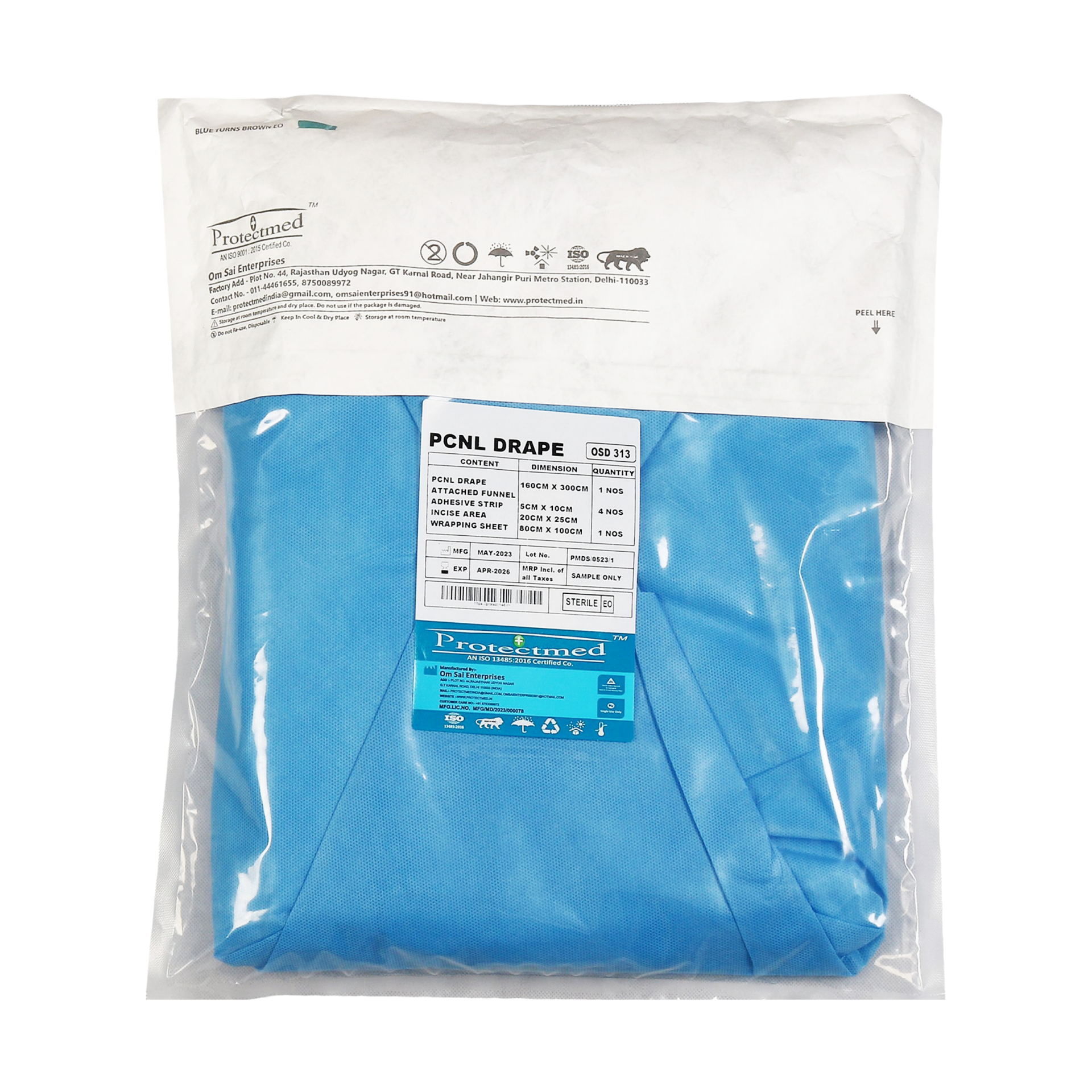
A PCNL (Percutaneous Nephrolithotomy) Drape, such as the ECO E913 model, is a specialized sterile surgical drape designed for use during percutaneous nephrolithotomy procedures. PCNL is a minimally invasive surgical technique employed to remove large or complex kidney stones. The drape provides a robust sterile barrier around the surgical site, effectively preventing contamination and maintaining an aseptic field throughout the entire duration of the procedure. Its design often includes specific fenestrations, integrated fluid collection pouches, and secure adhesive strips tailored precisely to the anatomical and procedural requirements of PCNL, ensuring optimal surgical access, efficient fluid management, and enhanced infection control. The "ECO" designation might imply an economical or environmentally conscious design, while "E913" is likely a specific product code for identification.
Uses
- Maintaining a sterile field during PCNL.
- Preventing surgical site contamination.
- Fluid management during surgery.
- Ensuring aseptic conditions for kidney stone removal.
Directions For Use
Applied by trained surgical staff following sterile draping techniques prior to the PCNL procedure.
Benefits
- Ensures surgical sterility.
- Reduces risk of surgical site infection.
- Optimizes surgical field visibility.
- Facilitates fluid collection and management.
- Designed for specific PCNL requirements.
- Disposable for single-use convenience.
Side Effects
- Allergic reaction to drape material (rare).
- Skin irritation from adhesive (rare).
- Inadequate barrier if torn or improperly applied.
- Heat retention under the drape.
- Static electricity buildup (rare).
- Dislodgement during surgery.
- Obstruction of surgical view if misplaced.
- Fluid pooling if collection pouches fail.
- Environmental impact of disposal (if not eco-friendly).
- Cost implications.
- Material degradation.
- Packaging damage compromising sterility.
Safety Measures
- Alcohol - No direct interaction with the drape. Ensure skin prep solutions are dry before draping to prevent fire risk.
- Pregnancy - No direct interaction with the drape itself; however, PCNL procedures during pregnancy require careful consideration of risks to mother and fetus.
- Breastfeeding - No direct interaction with the drape.
- Liver - No direct interaction with the drape.
- Kidney - Essential for procedures involving the kidney; ensures sterility during PCNL.
- Lung - No direct interaction with the drape; however, patient positioning for PCNL may affect respiratory mechanics.
Disclaimer
MedEHub is committed to delivering reliable, expert-reviewd information to help consumers make informed health decisions. However, the content provided on this website is for informational purposes only and is not intended to replace professional medical advice, diagnosis or treatment.
Always consult your doctor for any medical concerns, and discuss your questions about health conditions or medications with a qualified healthcare professional. Do not ignore or delay seeking professional medical advice based on information found on Med E Hub.
Our goal is to complement, not replace, the essential doctor-patient relationship.
| Shipping Cost |
|
| Shop Location | Assam, India |






No comments found for this product. Be the first to comment!