

About
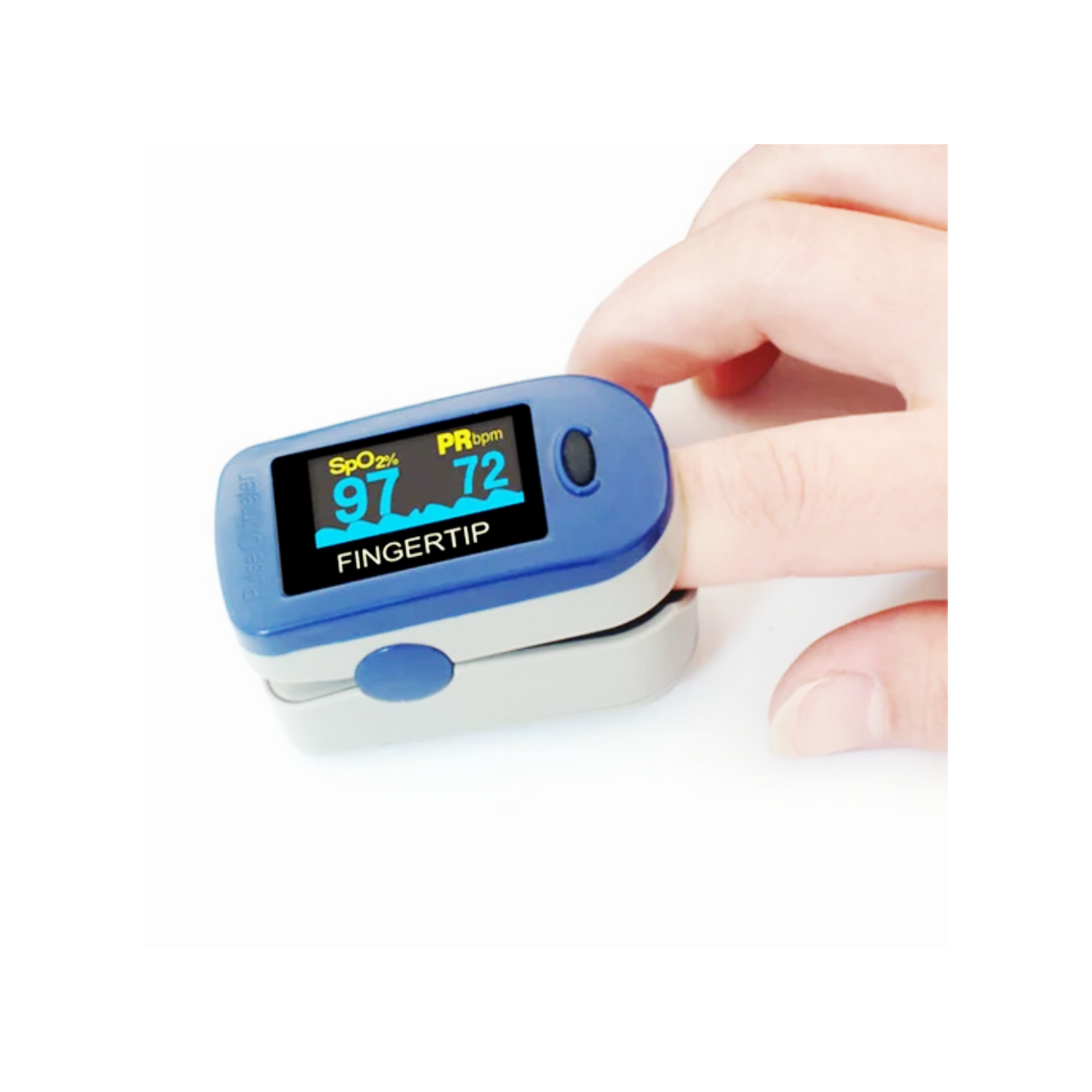
A pulse oximeter is a non-invasive medical device used to monitor oxygen saturation (SpO2) levels in the blood and measure pulse rate. It works by emitting light at two different wavelengths through a part of the body, typically a fingertip or earlobe, and then detecting the amount of light absorbed by oxygenated and deoxygenated hemoglobin. The device calculates the percentage of hemoglobin carrying oxygen, providing a quick and accurate assessment of a person's respiratory and circulatory function. Pulse oximeters are widely used in hospitals, clinics, and home settings to monitor patients with chronic respiratory conditions like COPD or asthma, during surgery, or for general health screening, offering vital information about oxygen delivery to tissues and helping to detect hypoxemia early.
Uses
- Monitoring blood oxygen saturation (SpO2).
- Measuring pulse rate.
- Assessing respiratory function.
- Screening for hypoxemia.
Directions For Use
Place on a finger, toe, or earlobe. Ensure the sensor is clean and the patient is still. Read the display for SpO2 and pulse rate.
Benefits
- Non-invasive and painless.
- Provides rapid oxygen saturation readings.
- Measures pulse rate simultaneously.
- Easy to use for home monitoring.
- Helps detect respiratory distress early.
- Portable and compact design.
Side Effects
- Skin irritation from prolonged use.
- Pressure marks on the digit.
- Inaccurate readings due to motion.
- False readings from nail polish or cold extremities.
- Interference from bright ambient light.
- Minor discomfort from clip pressure.
- Battery depletion leading to device failure.
- Device malfunction.
- Allergic reaction to sensor material (rare).
- Over-reliance on readings without clinical context.
- Delayed detection of other respiratory issues.
- Misinterpretation of data.
Safety Measures
- Alcohol - No direct interaction with the device.
- Pregnancy - Safe for use during pregnancy to monitor maternal oxygen levels.
- Breastfeeding - Safe for use during breastfeeding.
- Liver - No direct interaction; safe for use in patients with liver conditions.
- Kidney - No direct interaction; safe for use in patients with kidney conditions.
- Lung - Crucial for monitoring respiratory status in patients with lung conditions; provides vital information.
Disclaimer
MedEHub is committed to delivering reliable, expert-reviewd information to help consumers make informed health decisions. However, the content provided on this website is for informational purposes only and is not intended to replace professional medical advice, diagnosis or treatment.
Always consult your doctor for any medical concerns, and discuss your questions about health conditions or medications with a qualified healthcare professional. Do not ignore or delay seeking professional medical advice based on information found on Med E Hub.
Our goal is to complement, not replace, the essential doctor-patient relationship.
| Shipping Cost |
|
| Shop Location | Assam, India |









No comments found for this product. Be the first to comment!