

About
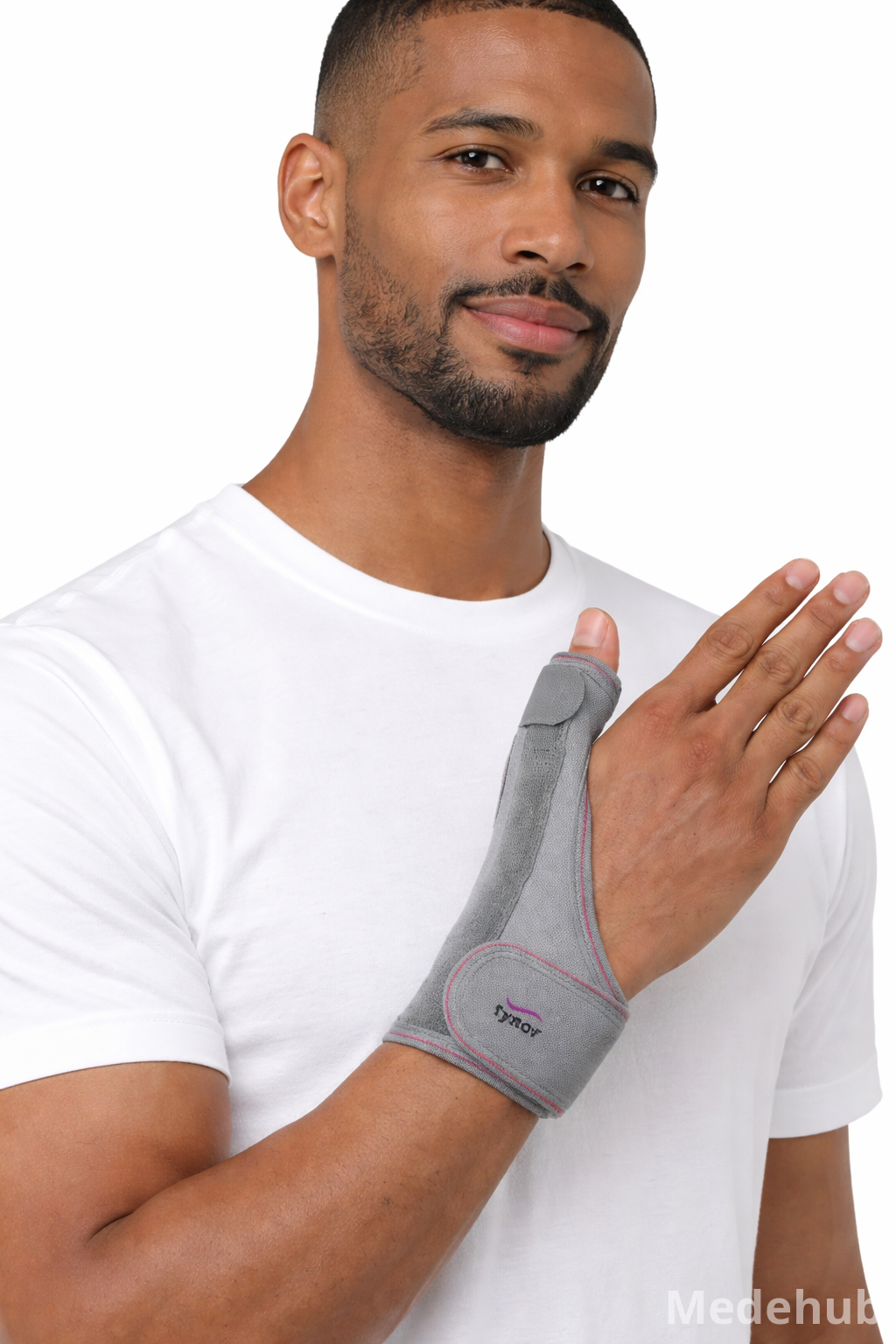
A thumb spica splint is a medical device designed to immobilize and support the thumb and wrist, specifically targeting the carpometacarpal (CMC) and metacarpophalangeal (MCP) joints of the thumb. It extends from the forearm, encompassing the wrist, and isolates the thumb, preventing movement that could exacerbate an injury or hinder healing. This type of splint is crucial in managing various conditions, including fractures of the thumb metacarpal or phalanges, ligamentous injuries such as skier's thumb (ulnar collateral ligament injury), and inflammatory conditions like De Quervain's tenosynovitis. By restricting motion, it reduces pain, inflammation, and provides a stable environment for tissue repair.
The design of a thumb spica splint ensures that while the thumb is immobilized, the other fingers remain free to move, allowing for some degree of functional independence. It is typically made from rigid or semi-rigid materials, often with adjustable straps to ensure a secure yet comfortable fit. Proper application and fit are essential to maximize its therapeutic benefits and prevent complications such as pressure sores or nerve compression. Healthcare professionals often prescribe and fit these splints, providing guidance on wear duration and care.
Uses
- Immobilization for thumb fractures or sprains.
- Management of De Quervain's tenosynovitis.
- Post-operative support for thumb surgeries.
- Stabilization of the thumb's ulnar collateral ligament injuries.
Directions For Use
Position the splint around the thumb and wrist, ensuring the thumb is properly aligned and immobilized. Securely fasten all straps for a snug, comfortable fit without restricting circulation.
Benefits
- Provides effective immobilization of the thumb and wrist.
- Reduces pain and inflammation associated with injuries.
- Supports the healing process of damaged tissues.
- Prevents further injury during daily activities.
- Allows for functional use of the other fingers.
- Often adjustable for a customized and comfortable fit.
Side Effects
- Skin irritation or redness.
- Pressure sores or blisters.
- Numbness or tingling if too tight.
- Swelling distal to the splint.
- Muscle stiffness or weakness upon removal.
- Joint stiffness in immobilized areas.
- Allergic reaction to material (rare).
- Discomfort or awkwardness during daily tasks.
- Impaired circulation if improperly fitted.
- Odor or hygiene issues with prolonged use.
- Delayed healing if not used correctly.
- Increased risk of infection if skin integrity is compromised.
Safety Measures
- Alcohol - No direct interaction. Avoid alcohol if it impairs judgment or ability to properly manage the injury requiring the splint.
- Pregnancy - Generally safe. Ensure comfortable fit and monitor for swelling, which can be common in pregnancy.
- Breastfeeding - Generally safe. No known direct interaction.
- Liver - No direct interaction. Liver conditions do not typically affect splint use, but overall health should be considered for healing.
- Kidney - No direct interaction. Kidney conditions do not typically affect splint use, but overall health should be considered for healing.
- Lung - No direct interaction. Lung conditions do not typically affect splint use.
Disclaimer
MedEHub is committed to delivering reliable, expert-reviewd information to help consumers make informed health decisions. However, the content provided on this website is for informational purposes only and is not intended to replace professional medical advice, diagnosis or treatment.
Always consult your doctor for any medical concerns, and discuss your questions about health conditions or medications with a qualified healthcare professional. Do not ignore or delay seeking professional medical advice based on information found on Med E Hub.
Our goal is to complement, not replace, the essential doctor-patient relationship.
| Shipping Cost |
|
| Shop Location | Assam, India |









No comments found for this product. Be the first to comment!