Is Hair Transplant Painful?
Introduction:
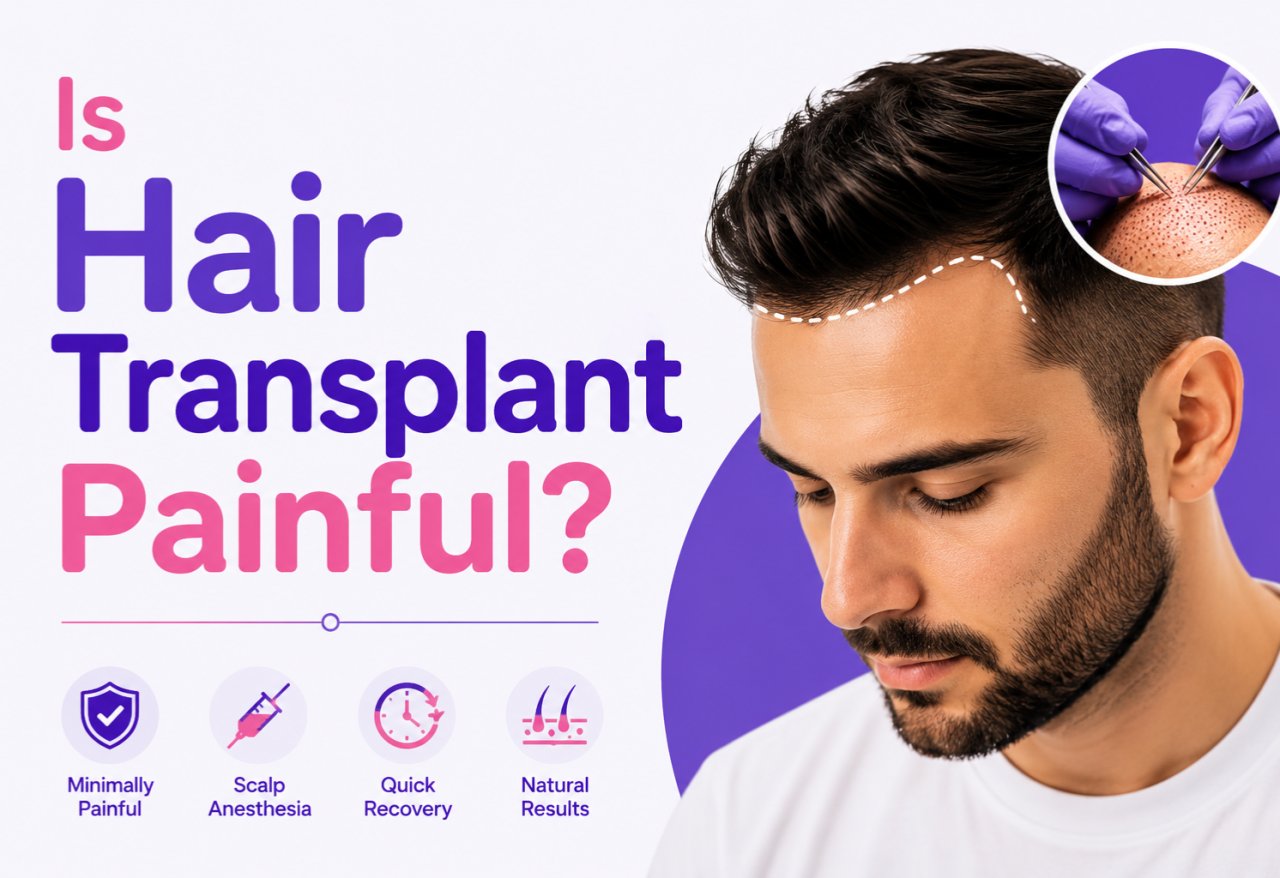
The process of hair transplant surgery is generally painless. The application of local anesthesia completely numbs the scalp. And when most patients were questioned, "Is hair transplant painful?” The response was equivalent to a series of sharp pinpricks that last about 60 seconds. Once the lidocaine kicks in, you'll simply feel pressure.
The Reality of the Procedure
A mixture of lidocaine and epinephrine is injected by surgeons, which makes the particular area unresponsive. And it lasts for 6 hours or more.
-
Initial numbing injections.
-
Vibrations from the extraction motor.
-
Persistent pressure during graft placement.
Pro-tip: Ask your surgeon if they use a "vibration device" during the initial numbing phase. These handheld tools create a sensory distraction that confuses your nerves. It makes the needle pokes almost impossible to feel.
Managing the First 48 Hours
As the effect of anesthesia reduces, patients start feeling slight discomfort in the next 48 hours. Most people find that standard ibuprofen manages this perfectly.
Don't scratch the grafts, even if the itching feels relentless. You risk pulling out a $5 graft with one careless fingernail.
Pro-tip: Store your saline spray in the refrigerator. Misting your scalp with chilled saline provides immediate, drug-free relief for that "burning" itch that usually hits on day three.
FUE (Follicular Unit Extraction) vs. FUT (Follicular Unit): The Pain Gap
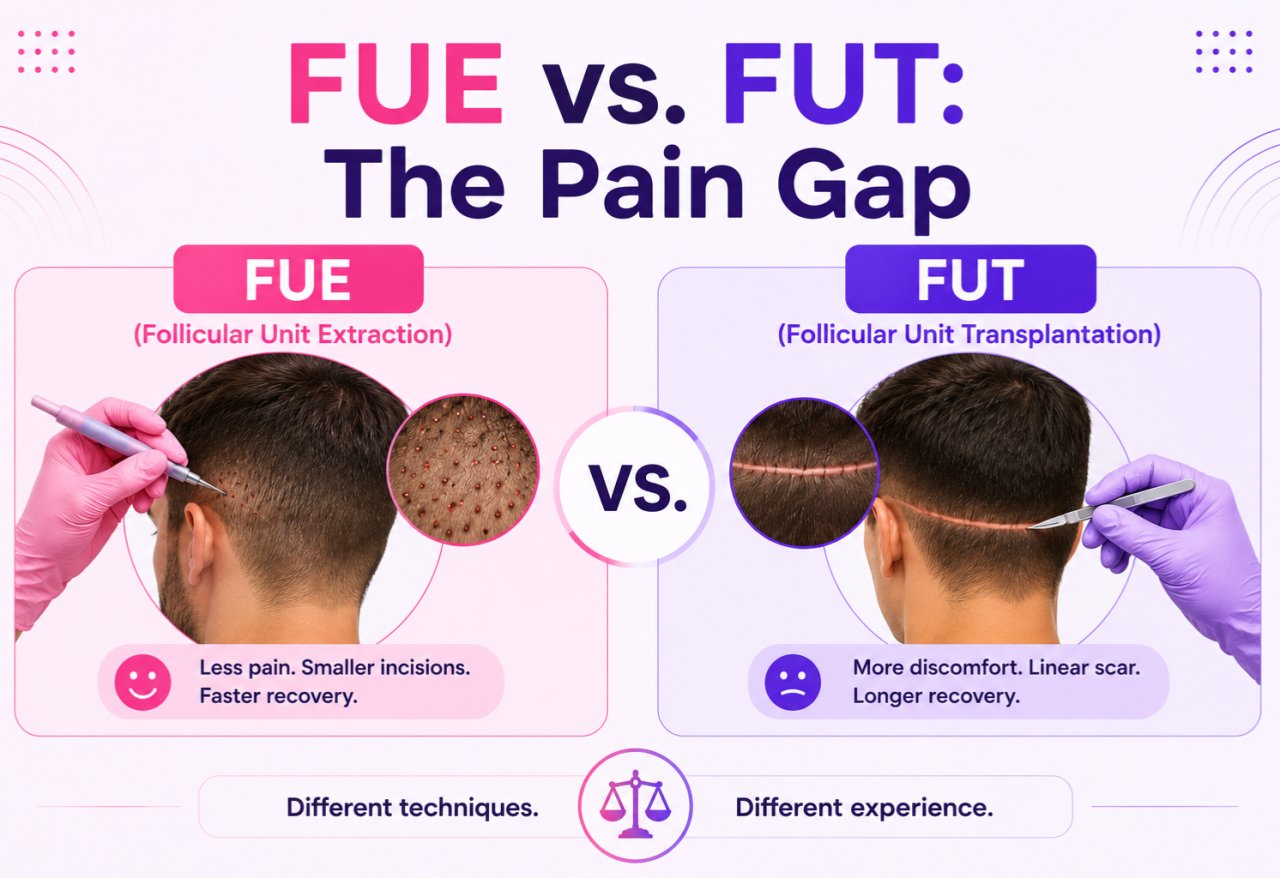
FUE is objectively easier on your body because it avoids a long linear incision. While FUT requires a strip of skin removal and subsequent stitches, FUE relies on tiny punches under 1mm in diameter.
-
FUE involves 0.8 mm to 1.0 mm microincisions.
-
FUT leaves a permanent linear scar.
-
FUE allows you to return to the gym within a week.
Pro-tip: If you go with FUT, the "tightness" isn't actually your skin stretching. It’s usually your neck muscles reacting to a bad sleeping angle. Use a travel neck pillow to keep your head at 45 degrees so you don't strain the donor site against your bedding.
How do you manage long-term sensitivity?
Nerve Recovery: For 3 to 6 weeks, your scalp might feel numb because the transplant procedure disrupts the tiny nerve endings near the surface of the skin.
Pro-tip: Don't panic if you feel a sudden "electric shock" sensation a month later. These are "nerve firings." They actually prove your scalp is successfully reconnecting the neural pathways to your new hair.
The Impact of Speed and Care
A surgeon’s technique determines your inflammation levels more than the tools they use. Rough tissue handling causes the massive swelling that turns a painless procedure into a miserable week of hair transplant recovery discomfort.
Speed matters here. A fast, efficient team minimizes the time your scalp remains open to the air.
Pro-tip: Choose a clinic that uses "Chilled Saline" to store your grafts. Keeping the tissue cold during its time outside your body cuts down the inflammatory response. This prevents the "Avatar" look, where your forehead and eyes swell up the next morning.
With Medebub, you can order your medicines online and have them delivered anywhere in India at a price that feels fair.