

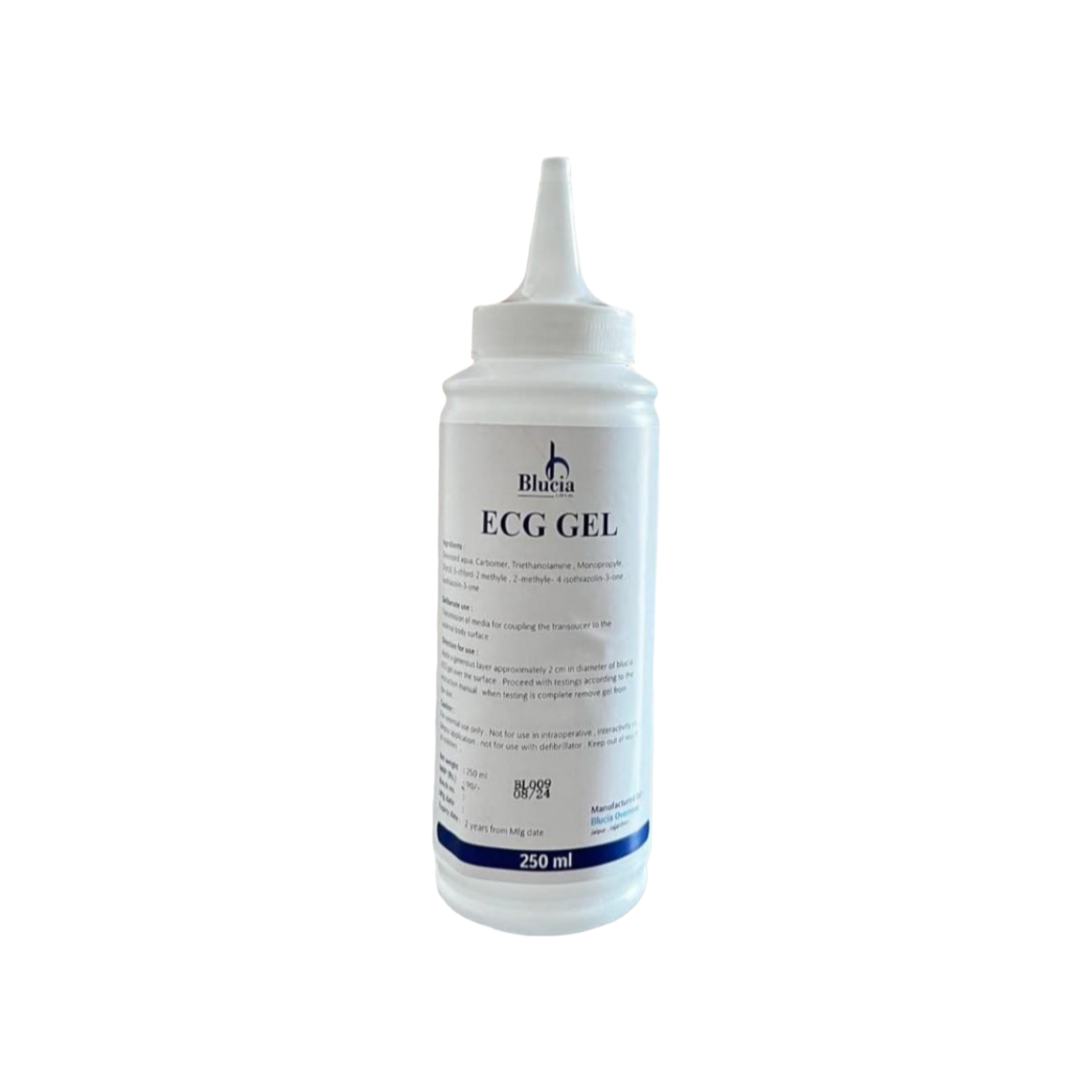
About
ECG gel is a specialized conductive medium essential for obtaining high-quality electrocardiogram (ECG) readings. Applied to the skin before placing ECG electrodes, its primary function is to reduce the electrical impedance between the skin and the electrode. The human skin, being a poor conductor of electricity, can significantly attenuate the faint electrical signals from the heart. ECG gel, typically water-based and formulated with electrolytes, creates a low-resistance pathway, allowing for efficient transmission of these signals to the ECG machine. This reduction in impedance minimizes signal artifact and noise, ensuring clearer, more accurate tracings that are crucial for precise cardiac diagnosis and monitoring. Its non-greasy, non-staining, and hypoallergenic properties make it suitable for various patient populations and clinical applications.
Uses
- Enhancing conductivity for electrocardiogram (ECG) recordings.
- Improving signal transmission for electroencephalogram (EEG).
- Facilitating ultrasound imaging by eliminating air gaps.
- Optimizing transcutaneous electrical nerve stimulation (TENS) therapy.
Directions For Use
Apply a small amount of gel to the skin where electrodes will be placed, or directly onto the electrode surface. Ensure even coverage for optimal conductivity.
Benefits
- Significantly enhances electrical conductivity between skin and electrodes.
- Reduces skin impedance for clearer signal transmission.
- Minimizes artifact and noise in diagnostic readings.
- Non-irritating and hypoallergenic formulation.
- Water-soluble for easy cleanup after use.
- Improves overall signal quality for accurate diagnosis.
Side Effects
- Skin irritation or redness at the application site.
- Allergic reaction to specific gel components (rare).
- Residue left on skin if not wiped off properly.
- Drying out of the gel if left exposed to air.
- Contamination risk if container is not sealed or handled aseptically.
- Discomfort if applied excessively or too cold.
- Poor adhesion of electrodes if gel is too thick or uneven.
- Interference with other topical medications.
- Staining of clothing or linens (though typically non-staining).
- Odor if product is expired or contaminated.
- Reduced efficacy if applied to hairy or oily skin without proper preparation.
- Potential for bacterial growth if stored improperly.
Safety Measures
- Alcohol - Avoid mixing with alcohol-based products on the skin as it may reduce conductivity or cause skin irritation. Ensure skin is dry if alcohol prep is used.
- Pregnancy - Generally considered safe for topical use during pregnancy. No known systemic absorption or adverse effects.
- Breastfeeding - Generally considered safe for topical use during breastfeeding. No known systemic absorption or adverse effects on the infant.
- Liver - Not directly applicable as it is a topical product with no systemic absorption.
- Kidney - Not directly applicable as it is a topical product with no systemic absorption.
- Lung - Not directly applicable as it is a topical product with no systemic absorption.
Disclaimer
MedEHub is committed to delivering reliable, expert-reviewd information to help consumers make informed health decisions. However, the content provided on this website is for informational purposes only and is not intended to replace professional medical advice, diagnosis or treatment.
Always consult your doctor for any medical concerns, and discuss your questions about health conditions or medications with a qualified healthcare professional. Do not ignore or delay seeking professional medical advice based on information found on Med E Hub.
Our goal is to complement, not replace, the essential doctor-patient relationship.
| Shipping Cost |
|
| Shop Location | Assam, India |








No comments found for this product. Be the first to comment!