
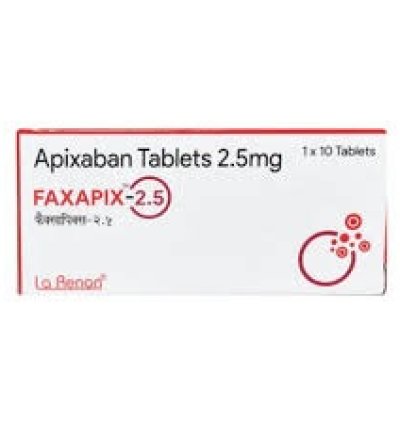
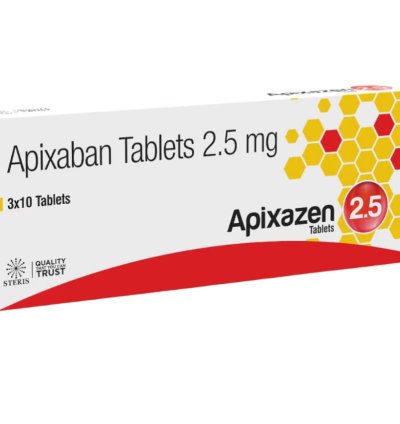
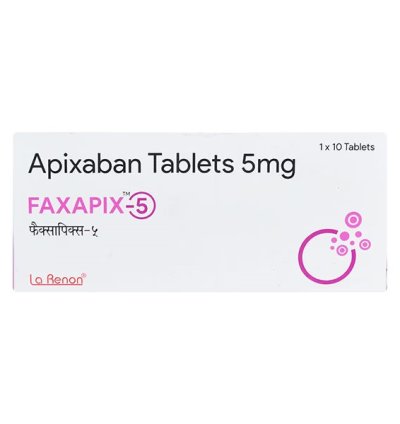
AboutFAXAPIX 2.5 contains Apixaban, a direct oral anticoagulant (DOAC) that selectively and reversibly inhibits free and clot-bound Factor Xa. Factor Xa is a key enzyme in the coagulation cascade, responsible for converting prothrombin to thrombin, which in turn converts fibrinogen to fibrin, forming a blood clot. By inhibiting Factor Xa, Apixaban reduces thrombin generation and clot formation, thereby preventing the formation of harmful blood clots.This medication is widely used for its efficacy in preventing and treating various thromboembolic conditions. Its predictable pharmacokinetic profile and lack of need for routine coagulation monitoring make it a convenient alternative to traditional anticoagulants like warfarin. However, careful consideration of bleeding risk and patient-specific factors is essential for safe and effective use.UsesPrevention of stroke and systemic embolism in non-valvular atrial fibrillationTreatment of deep vein thrombosis (DVT)Treatment of pulmonary embolism (PE)Prevention of recurrent DVT and PEDirections For UseTake orally, usually twice daily, with or without food. Swallow the tablet whole.BenefitsSignificantly reduces the risk of stroke in AFib patientsEffectively treats and prevents dangerous blood clotsDoes not require routine blood monitoring (e.g., INR)Fewer known drug-food interactions compared to warfarinProvides a predictable anticoagulant effectConvenient fixed-dose regimenSide EffectsIncreased risk of bleeding (e.g., nosebleeds, gum bleeding)Bruising easilyGastrointestinal bleedingHematuria (blood in urine)Rash or allergic reactionsAnemiaNauseaDizzinessFatigueHeadacheMinor cuts bleeding longer than usualBlood in stools (black or tarry stools)Safety MeasuresAlcohol - Excessive alcohol consumption can increase the risk of bleeding when taking Apixaban. It is advisable to limit or avoid alcohol.Pregnancy - Apixaban is not recommended during pregnancy due to the potential risk of bleeding in the mother and fetus. Consult your doctor immediately if you become pregnant.Breastfeeding - It is not known if Apixaban is excreted in breast milk. Due to the potential for serious adverse reactions in the infant, breastfeeding is not recommended.Liver - Apixaban is not recommended in patients with severe liver impairment or liver disease associated with coagulopathy due to increased bleeding risk.Kidney - Dose adjustment of Apixaban is required in patients with moderate to severe kidney impairment. Regular monitoring of kidney function is important.Lung - Apixaban is used to treat pulmonary embolism (PE), a condition affecting the lungs. It does not directly impact lung function but is crucial for managing lung-related clot conditions.DisclaimerMedEHub is committed to delivering reliable, expert-reviewd information to help consumers make
informed health decisions. However, the content provided on this website is for informational purposes only
and is not intended to replace professional medical advice, diagnosis or treatment.Always consult your doctor for any medical concerns, and discuss your questions about health
conditions or medications with a qualified healthcare professional. Do not ignore or delay seeking professional
medical advice based on information found on Med E Hub.Our goal is to complement, not replace, the essential doctor-patient relationship.
| Shipping Cost |
|
| Shop Location | Assam, India |
No comments found for this product. Be the first to comment!