

About
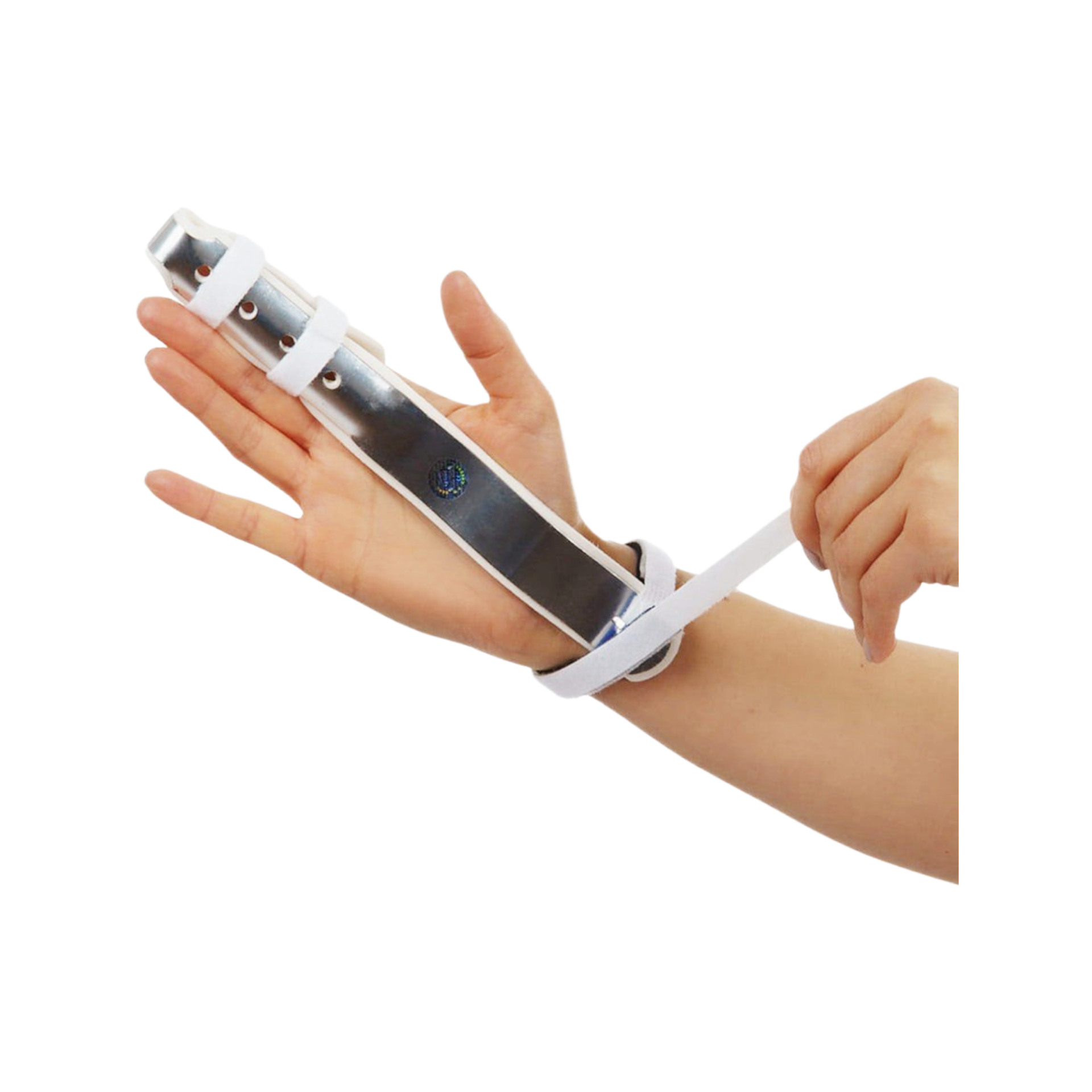
A finger extension splint is a medical device designed to immobilize and support an injured finger in an extended position, promoting proper healing and preventing further damage. These splints are commonly used for conditions such as mallet finger, boutonnière deformity, fractures of the distal phalanx, and tendon injuries that require the finger to be kept straight. By maintaining the finger in extension, the splint helps to align fractured bones, reduce stress on healing tendons, and prevent contractures. They are typically lightweight, adjustable, and designed for comfortable wear over extended periods, allowing for daily activities while ensuring therapeutic support.
The primary goal of a finger extension splint is to facilitate the recovery process by providing a stable environment for the injured digit. It helps to alleviate pain, reduce swelling, and protect the delicate structures of the finger from external forces. The design often allows for ventilation to prevent skin maceration and discomfort. Proper application and adherence to wearing instructions are crucial for achieving optimal therapeutic outcomes and restoring full function to the affected finger. Regular monitoring of skin integrity beneath the splint is also important to prevent pressure sores or irritation.
Uses
- Treating mallet finger injuries.
- Supporting finger fractures.
- Managing tendon ruptures or repairs.
- Preventing finger contractures.
Directions For Use
Apply the splint to the affected finger, ensuring it is comfortably snug.
Wear as directed by a healthcare professional, typically for several weeks.
Benefits
- Immobilizes and supports injured fingers.
- Promotes proper healing of fractures and tendons.
- Reduces pain and swelling.
- Prevents further injury or deformity.
- Lightweight and comfortable for extended wear.
- Allows for some daily activities while healing.
Side Effects
- Skin irritation or redness.
- Pressure sores if too tight.
- Discomfort or pain.
- Reduced finger mobility in unaffected joints.
- Swelling if circulation is impaired.
- Allergic reaction to material.
- Stiffness after prolonged immobilization.
- Difficulty with fine motor tasks.
- Risk of re-injury if removed prematurely.
- Maceration of skin if not kept dry.
- Numbness or tingling if nerve compression occurs.
- Psychological impact of restricted movement.
Safety Measures
- Alcohol - Not directly applicable; ensure skin is clean and dry before application, avoid alcohol-based cleansers under the splint.
- Pregnancy - Safe for use during pregnancy as it is a topical device; no systemic effects.
- Breastfeeding - Safe for use during breastfeeding as it is a topical device; no systemic effects.
- Liver - Not directly applicable; no systemic absorption or impact on liver function.
- Kidney - Not directly applicable; no systemic absorption or impact on kidney function.
- Lung - Not directly applicable; no respiratory impact.
Disclaimer
MedEHub is committed to delivering reliable, expert-reviewd information to help consumers make informed health decisions. However, the content provided on this website is for informational purposes only and is not intended to replace professional medical advice, diagnosis or treatment.
Always consult your doctor for any medical concerns, and discuss your questions about health conditions or medications with a qualified healthcare professional. Do not ignore or delay seeking professional medical advice based on information found on Med E Hub.
Our goal is to complement, not replace, the essential doctor-patient relationship.
| Shipping Cost |
|
| Shop Location | Assam, India |







No comments found for this product. Be the first to comment!