

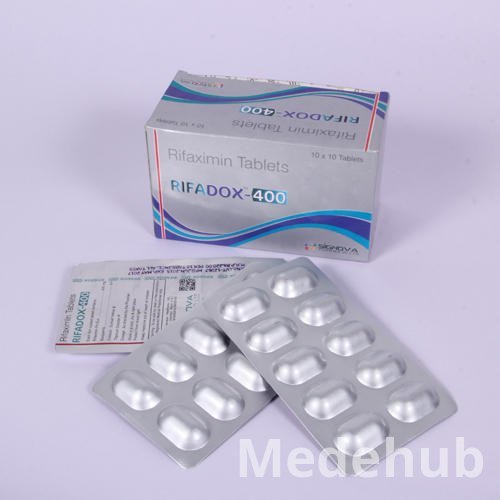
About
Rifaximin is a non-systemic antibiotic that acts locally within the gastrointestinal tract, exhibiting minimal systemic absorption. This unique pharmacokinetic profile allows it to achieve high concentrations in the gut lumen, making it highly effective against various enteric pathogens without significant systemic exposure or side effects. Its mechanism of action involves inhibiting bacterial RNA synthesis by binding to the beta-subunit of bacterial DNA-dependent RNA polymerase. This leads to a bacteriostatic effect against a broad spectrum of gut bacteria, including both gram-positive and gram-negative aerobes and anaerobes. Rifaximin is particularly valuable in managing conditions where localized antimicrobial action is desired, such as traveler's diarrhea, hepatic encephalopathy, and irritable bowel syndrome with diarrhea, by reducing bacterial load and associated symptoms within the gut.
Uses
- Traveler's diarrhea caused by non-invasive strains of E. coli.
- Reduction in risk of overt hepatic encephalopathy recurrence.
- Irritable Bowel Syndrome with Diarrhea (IBS-D).
- Small Intestinal Bacterial Overgrowth (SIBO).
Directions For Use
Take orally as directed by your physician, usually with or without food.
Do not crush or chew the tablet; swallow whole with water.
Benefits
- Targets gut bacteria with minimal systemic absorption.
- Effective against a broad spectrum of enteric pathogens.
- Reduces symptoms of traveler's diarrhea.
- Helps manage hepatic encephalopathy recurrence.
- Improves symptoms in IBS-D patients.
- Generally well-tolerated with a favorable safety profile.
Side Effects
- Nausea
- Abdominal pain
- Flatulence
- Headache
- Dizziness
- Peripheral edema
- Fatigue
- Constipation
- Diarrhea (paradoxical)
- Rash
- Muscle spasms
- Hypersensitivity reactions
Safety Measures
- Alcohol - Generally, alcohol does not directly interact with rifaximin due to its minimal systemic absorption. However, alcohol can exacerbate underlying gastrointestinal conditions, so moderation is advised.
- Pregnancy - Rifaximin is generally not recommended during pregnancy unless clearly necessary, as animal studies have shown some risk. Consult a doctor to weigh potential benefits against risks.
- Breastfeeding - It is unknown if rifaximin is excreted in human milk. Due to minimal systemic absorption, exposure to the infant is likely low, but caution is advised. Consult a healthcare professional.
- Liver - Rifaximin is minimally absorbed, so dose adjustment is generally not required in patients with hepatic impairment. However, caution is advised in severe liver disease.
- Kidney - No dose adjustment is typically needed for patients with renal impairment due to its poor systemic absorption and fecal excretion.
- Lung - Rifaximin primarily acts in the gut and has no direct known impact on lung conditions. No specific precautions are usually needed for lung patients.
Disclaimer
MedEHub is committed to delivering reliable, expert-reviewd information to help consumers make informed health decisions. However, the content provided on this website is for informational purposes only and is not intended to replace professional medical advice, diagnosis or treatment.
Always consult your doctor for any medical concerns, and discuss your questions about health conditions or medications with a qualified healthcare professional. Do not ignore or delay seeking professional medical advice based on information found on Med E Hub.
Our goal is to complement, not replace, the essential doctor-patient relationship.
| Shipping Cost |
|
| Shop Location | Assam, India |













No comments found for this product. Be the first to comment!