

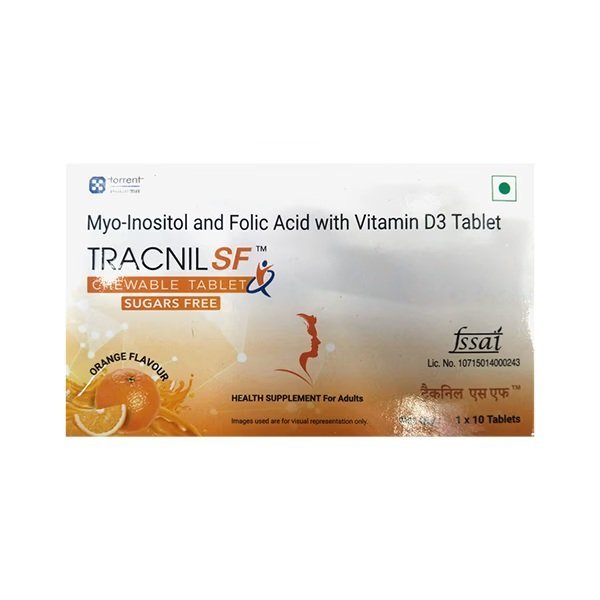
About
Tracnil SF Tablet typically contains Tranexamic Acid, an antifibrinolytic agent. It works by reversibly binding to plasminogen, a precursor to plasmin, and thereby inhibiting the activation of plasminogen to plasmin. Plasmin is an enzyme responsible for breaking down fibrin clots, a process known as fibrinolysis. By inhibiting fibrinolysis, tranexamic acid helps to stabilize blood clots and reduce excessive bleeding.
This medication is particularly useful in conditions where there is increased fibrinolytic activity or when excessive bleeding needs to be controlled. The 'SF' in the name might indicate a specific formulation or strength, but the core action remains its ability to promote hemostasis. It is widely used in various medical and surgical settings to manage or prevent blood loss, offering a targeted approach to support the body's natural clotting mechanisms.
Uses
- Management of heavy menstrual bleeding (menorrhagia)
- Prevention of bleeding in dental procedures (e.g., tooth extraction)
- Control of epistaxis (nosebleeds)
- Reduction of bleeding during and after surgery
Directions For Use
Take the tablet orally with a glass of water, with or without food, as directed by your physician. Follow the prescribed dosage and duration strictly.
Benefits
- Effectively reduces excessive bleeding
- Helps stabilize blood clots
- Minimizes blood loss during procedures
- Reduces duration and volume of menstrual bleeding
- Supports natural hemostasis
- Convenient oral administration
Side Effects
- Nausea
- Diarrhea
- Vomiting
- Abdominal pain
- Headache
- Dizziness
- Allergic skin reactions (rash, itching)
- Visual disturbances (rare)
- Thromboembolic events (rare)
- Muscle pain
- Back pain
- Hypotension (with rapid IV administration, less common orally)
Safety Measures
- Alcohol - No direct interaction with alcohol. However, excessive alcohol consumption can impair clotting, so moderation is advised.
- Pregnancy - Use with caution during pregnancy, only if clearly indicated and after consulting a physician. Limited data available.
- Breastfeeding - Tranexamic acid is excreted in breast milk. Consult a doctor to weigh the benefits against potential risks to the infant.
- Liver - Use with caution in patients with liver disease, as it is partially metabolized in the liver. Dose adjustment may be considered.
- Kidney - Primarily excreted by the kidneys. Dose adjustment is necessary in patients with renal impairment to prevent accumulation and toxicity.
- Lung - Use with caution in patients with a history of thromboembolic disease, including pulmonary embolism, due to its antifibrinolytic action.
Disclaimer
MedEHub is committed to delivering reliable, expert-reviewd information to help consumers make informed health decisions. However, the content provided on this website is for informational purposes only and is not intended to replace professional medical advice, diagnosis or treatment.
Always consult your doctor for any medical concerns, and discuss your questions about health conditions or medications with a qualified healthcare professional. Do not ignore or delay seeking professional medical advice based on information found on Med E Hub.
Our goal is to complement, not replace, the essential doctor-patient relationship.
| Shipping Cost |
|
| Shop Location | Assam, India |









No comments found for this product. Be the first to comment!